Managing Editor
February 10th, 2023
CALCUTTA
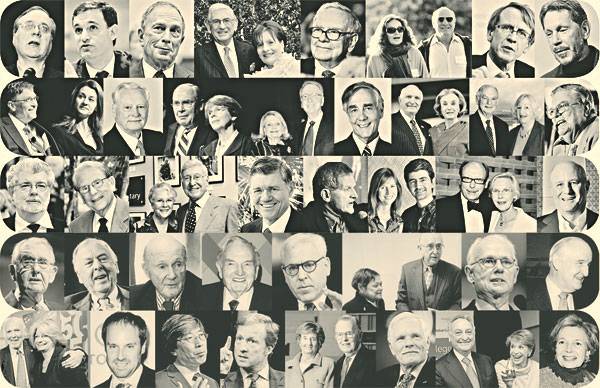
A little over a decade ago, Bill Gates and Warren Buffett launched the Giving Pledge, which, in their words is, “a commitment by the world’s wealthiest individuals and families to dedicate the majority of their wealth to giving back.”
According to the official website, 236 billionaires and multi-millionaires from 28 countries have made the so-called pledge.
However, none of these people have directly given a cent to the deadliest twin earthquakes in history, which have ravaged much of Turkey and Syria. Only the U.S.-based self-made billionaire and Turkish immigrant Hamdi Ulukaya, founder of Chobani Yugurt has stepped up, offering a donation of US $1 million. Ulukaya has requested others join him in donating towards ongoing rescue and recovery operations, and wrote in a tweet that he would also match donations made up to $1 million through the Turkish Philanthropy Funds. That threshold has been met, a Chobani spokespeson said, bringing his total donation to $2 million. But till date, none of do-gooder ‘Giving Pledgors’ have offered even a crumb from their table, neither have their billionaire not-so-do-gooder peers.
This, by the way, is not Ulukaya’s first foray into actual charitable activity rather than making empty pledges like others. He established the Tent Partnership for Refugees in 2016, a non-profit organization that works towards encouraging big corporations to hire refugees, and has long been an advocate of hiring migrants, stating that they are the most motivated workers, having been forced to leave everything behind to escape various dangers.
That said, certain companies are offering help: Amazon has prepared donations of goods, including food, baby food, blankets, tents and medicines, with the first shipments departing from its warehouse in Istanbul Wednesday, the US retail giant said Monday. By contrast, there are no announcements from the company that its founder, Jeff Bezos, the third richest person in the world, according to Forbes Magazine with a net worth of 121.4 Billion dollars has donated any actual money. Apple CEO Tim Cook tweeted: “Apple will be donating to relief and recovery efforts.” Five days out, the trillion-dollar tech giant known for its speed of operations has yet to detail in what form and to what extent such “efforts” would come to fruition. Google CEO, Sundar Pichai, tweeted “We’ve activated SOS alerts to provide relevant emergency information to those impacted.” This would have been marginally effective if the internet was actually working in the quake-shattered region. Almost as an afterthought, he mentioned that Google would contribute to relief efforts. Like their competing cousin, Apple, no details have been offered even though five days have passed since the two earthquakes hit.
Only German telecom company, Deutsche Telekom has offered funds, thus far, donating €1 million (USD $1.1 million) to a German alliance of 23 aid groups. They have also made calls and text messages from Germany to Turkey and Syria free of charge to help connect the victims with ex-pat family, friends, and support groups.
Shamed by an appeal by the Sun newspaper, Tesco and Marks and Spencer in the UK have pledged a combined £150,000, an amount that a handful of private middle-class citizens could have raised. But some of the royals have chipped in for whatever that’s worth.
The kicker is the non-offer by the world’s second wealthiest tycoon (richest man in 2022), namely Elon Musk, to provide his Star Link satellite service to bridge communications gaps caused by the devastation, adding “Star Link is not approved in Turkey.” Indeed, Turkey has said that they have ample satellite coverage. The problems are in basic infrastructure, which has been obliterated.
This has been lapped up by the press as “companies coming to the rescue,” or “big tech stepping up,” when the so-called efforts are vague and sparse – and miniscule compared to their bottom lines.
Perhaps the reason why Giving Pledgors have been so stingy about earthquake relief is that the pledge actually commits them to nothing! It is merely a promise or a pretension, depending on the interpretation to give away money for good causes at some point in someone’s life or after their death – but only if they really feel like it. As stated on givingpledge.org, in their FAQs, “The Giving Pledge is a moral commitment – not a legally binding one.” So, ‘pledgors’ can walk back from their “moral commitments” without any legal consequence. Such cynical about-face may well engender bad press – but the media beast is a hungry animal, and quickly moves on to other prey. Hence, media storms can easily be ridden out.
What about the money that actually is dispersed for the ‘common good’? Unfortunately, rather than giving to well-established charitable organizations, many of these billionaires prefer endowing personal foundations, which are not really charities (they are corporations), many of which are structured to enrich the benefactor and, more importantly, buy influence. Indeed, how philanthropy differs from charity is scale: the latter impacts lives on a small scale; the former is an exercise in power purported to be for the public good on a grand scale. Moreover, such people have helped structure the economy so the top 1% can accumulate wealth faster than they can possibly give it away.
Take Bill Gates, for instance. When he made the pledge in 2010, his net worth was $53 billion. He had pledged then to give away roughly half of it or $26.5 Billion of it. Ten years later, his net worth is $115 billion. Bill Gates is 64 years old, so at this rate, he’ll be worth $250 billion or more by the time he’s supposed to have given away at least half his wealth at the time of the pledge, making the pledge worth around 10% of its original value. Adjusted for the time value of money the original pledge is worth around 12.4 Billion dollars, today – or less than half in real terms than originally pledged. This would be roughly five percent of Mr. Gates’ net worth.
To be fair, he has since pledged to give away 95% of his fortune. What real percentage that will be at the time of his bequeathal or death remains to be seen. But again, he’s not donating to UNICEF or Save the Children or The International Rescue Committee, organizations that are active in crisis zones like the area devastated by the Turkey-Syria earthquake; rather, he’ll be giving to his foundation, which he founded with his then wife, Melinda Gates, keeping BFF Warren Buffet as trustee (since resigned due to the creepy association between Gates and human trafficker/ pedophile Jeffrey Epstein). More about the foundation is to follow.
Speaking of Warren Buffett, his situation is similar but worse. In 2010, his net worth was $39 billion; today, his net worth is $82 billion. Buffett is 90 years old, so if he’s planning on giving away at least half his wealth, he better live well past 100.
There are three reasons the so-called Giving Pledge hasn’t panned out.
According to the decades-old think tank the Institute for Policy Studies:
A growing share of these high-end donations go not to the organizations that actually perform charitable work, but to tax-privileged private foundations and donor-advised funds that pay only a small percentage of their assets to support working charities. These vehicles offer substantial tax benefits to donors, but may then hoard most or all of these donations in their endowments, drastically limiting what’s available to on-the-ground nonprofits.
In other words, many of the Giving Pledge billionaires are just giving back to themselves.
And even those who do give to real charities, like Bill Gates, tend dole it out in dribs and drabs and then insist upon controlling how it’s spent. They thus become the bottleneck to distributing their money, thereby allowing their wealth to grow at a faster rate than their giving.
Fake charities are just the proverbial iceberg’s tip. They are just one of many tax dodges that protect the ultra-wealthy from paying their fair share of taxes. Donald Trump’s $750 federal tax payment is far from unusual. Even without offshore accounts and other illegal tax dodges, most billionaires pay next to nothing in taxes.
Just to be clear, billionaires not paying their fair share (while enjoying all the benefits of civilization) means that you and I must make up the slack with our own taxes. It also means that you and I are on the hook to pay off the deficit, which was already huge and has exploded as a result of the coronavirus.
In other words, the Giving Pledge is a huge redistribution of wealth from middle class to the upper one tenth of one percent.
The so-called Giving Pledge has been a huge public relations victory because it’s allowed billionaires to recast themselves from robber barons to generous benefactors.
By improving the public image of the billionaire class, the Giving Pledge has made it more difficult for governments (especially the U.S. government) to even so much consider financial reforms that would allow workers and small businesspeople a fair share of the huge productivity gains of the past three decades
The Bill and Melinda Gates Foundation, which spends more than the World Health Organization on global public health is notoriously anti-IP reform. So, rather than bringing down the price of life-saving drugs, the foundation advocates to keep them high. It’s fine for those who may be able to procure them through the largess of the foundation – but what about the rest of the world? Most of it is poor and lacking the resources to afford effective medical care.
The foundation has contributed to pharmaceutical companies rather than to help strengthen the health infrastructure of poor countries. The latter could have helped countries prevent many deaths due to Covid-19. Instead, the focus was on the vaccine, most of which have proven to be largely ineffective in actually preventing Covid-19. To cover this up, the medical establishment maintained that vaccines lessen the impact of the virus, and therefore should be taken, anyway. There is no actual evidence to back this up except for some statistical studies, which don’t actually go into the mechanisms by which the vaccine can weaken the virus – in other words, these are not scientific studies, merely the same math that goes into polling forecasts and market research studies.
Indeed, concerns were sparked over the Foundation’s direct roll in keeping Covid-19 vaccine prices high: Consider the case of pharma company Astra Zeneca, which partnered with the University of Oxford in April 2020 to roll out a vaccine developed by Oxford researchers. Initially, Oxford released a statement, available on its website, saying that «associated products and services to address the Covid-19 pandemic» would be offered through non-exclusive, royalty-free licenses.
But later the university changed its mind. As reported by Fortune Magazine, Oxford made a stunning about-face after widely reported talks with the Bill & Melinda Gates Foundation. It signed an exclusive vaccine deal with Astra Zeneca that gave the pharmaceutical giant sole rights and no guarantee of low prices.
Astra Zeneca initially promised that it would distribute the vaccine on a no profits basis in poor countries, but, like the giving pledge – the promise was merely a moral commitment and not a legally binding one.
Many poor and middle-income nations, including Bangladesh, South Africa and Uganda, have had to and are continuing to pay more for the Oxford-Astra Zeneca vaccine than EU countries. Uganda paid three times the cost in Europe. Rather than helping improve access to life-saving vaccines, the deal that the Gates Foundation brokered between Oxford and Astra Zeneca has profoundly undermined global access to life-saving healthcare.
It is not the first time that the Gates Foundation has prioritized western pharmaceutical companies at the expense of the world’s neediest people.
When it comes to global health and development, the vast majority of the Gates Foundation’s money is channeled to western researchers and to wealthy pharmaceutical companies based in the US and Europe, something that compounds inequality between the global north and global south.
Gates has long preferred a “charity” model of global health over a “justice” model, calling on big pharma companies to voluntarily set prices for drugs, lowering them out of their own good will, rather than conceding that governments should demand price cuts. Gates has even showered non-repayable grants on big pharma, using tax-privileged gifts to enrich the world’s most profitable pharma companies.
This outpouring of charity for wealthy pharma companies is questionable at a time when the same companies are known to fleece customers by charging grossly inflated prices for life-saving drugs and vaccines.
Médecins Sans Frontières has pointed out that while global vaccination rates have improved since 2000 with overall rates doubling, the cost of basic vaccine packages in developing countries has grown 68-fold, jacked up by the public-private corporate partnership approach championed by the Gates Foundation.
FARMING IN AFRICA
In the mid-2000s, the foundation decided that they were going to improve agriculture and food security in Africa. Various international bodies duly signed on to the program, and Kofi Annan was on hand to serve as its chairman, but it soon became clear that what the Gates Foundation was after was to make African agriculture more western in nature, utilizing western scaling and financial methodologies to accomplish this. Farmers would get more access to credit, so they could buy fertilizers and machinery, which they didn’t need, being subsistence farmers. But they were told they could sell their crops to unseeable markets for hefty profits. This grew a new class of facilitators all to reminiscent of colonialization of industry: the dealers. Such middlemen between the farmers and the doyens of global finance upon whom these farmers now depended, siphoned off revenues and drove up prices. Subsistence farmers were now entrepreneurs turning a starving continent into a global breadbasket.
Instead, the program ended up trapping poor farmers in increasing amounts of debt, while burdening them with technologies that were better suited for large industrial farms. The economies of scale simply could not be realized on small family plots. It created a going concern problem – and this may have been the point all along: Plenty of small plot holders ended up selling their land and moving to shantytowns in the cities; data from the Land Matrix shows that since 2000, nearly 10 percent of the continent’s arable land has been bought up by large-scale commercial farmers. The end of industrialization of Africa’s farmland came to fruition – sans the original farmers!
The problem with foundations is that they are not charities. Their boards need not have 50% arms-length membership; they can hire who they want, including relatives, paying them hefty salaries; and they aren’t bound by the disbursement rules of charities while maintaining tax-exempt status in the USA. They are run by the biases and whims of their founder/directors, which typically are not based on expert knowledge.
And then there’s the financial benefit. Foundations, unlike charities, actually help accumulate rather than disburse wealth. Under U.S. law, charitable foundations must disburse 5 percent of their assets every year to maintain their tax-exempt status. But the assets of the Gates Foundation Trust are mostly in stock, including investments in some of the companies that contribute to the same problems the foundation is supposed to be fighting—and stock prices are not limited to a 5-percent annual return. In one year, entirely apart from any actual donations, the value of the Foundation’s assets rose by nearly $10.5 billion. That’s more than three times the total net worth of Donald Trump. The Foundation is thereby making far more money than it gives away, and all that income is completely tax-free. If this seems like a scam, it ought to. Actually, it’s clever loophole in the tax and legal rules for the purpose of retaining massive quantities of wealth.
So, the answer to the question, where are all the do-gooder billionaires in addressing earthquake relief is simple? – It’s not in the interests of their foundations to actually help rebuild devastated areas, improve the lives of the displaced and poor, and actually disburse money to real people.
“I’m excited to announce that we’ve agreed to acquire WhatsApp and that their entire team will be joining us at Facebook.” – Mark Zuckerberg, CEO Facebook ZUCKERBERG’S STATEMENT:…
THE POET, THE PRIZE, AND ITS PEDAGOGY “because of his profoundly sensitive, fresh and beautiful verse, by which, with consummate skill, he has made his poetic thought, expressed…
CONVICTION OF INDIAN AMERICAN TRADER LEAVES MORE QUESTIONS THAN ANSWERS ANOTHER CASE OF SELECTIVE PROSECUTION? MANY WOULD SAY ‘NO’: MARTOMA HAS A TRACK RECORD OF DISHONESTY FROM HIS…
VIKRAM SETH: A Virtuoso Comes Calling, Again There are two pillars, of whom it can be said are responsible for supporting the structure of what Salman…
On the 117th anniversary of his birth, we reflect on the life of Subhas Chandra Bose, one of India’s most popular and misunderstood freedom fighters. Bose or Netaji…
A review magazine about Arts, Culture, Current Events, History and Philosophy, and featuring interviews – The Global Calcuttan is a person inhabiting a fortress of the mind –…
Does Jhumpa Lahiri’s Real Skill Lie in Short Stories? I have great respect for Jhumpa Lahiri. Some of her stories, especially, seem to me among the best written by any living…

COURT GRANTS RIGHT TO SUE TATAs IN LONDON FOR LAPSE IN SECURITY ON 26/11 By S.B. Veda with inputs from agencies LONDON — Not long after the tragic…
 The Global Calcuttan Magazine
 The Global Calcuttan Magazine